Talk: Known Unknowns, Unknown Knowns
Decision Intelligence Lessons from the Iran War
On 28 February 2026, the United States and Israel launched Operation Epic Fury against Iran — one of the most strategically telegraphed and yet analytically misread conflicts in modern history. Strikes were started mid-negotiation, based on shifting rationales, against an adversary whose behaviour had been continuously monitored for decades. The result: a regional war, a blockaded strait carrying 20% of the world's traded oil, and a nuclear question still unresolved.
For competitive and market intelligence professionals, this conflict is not a geopolitical curiosity. It is a masterclass — and a cautionary tale — in the pathologies that afflict intelligence when it is subordinated to decision-making already made.
This talk draws on the arc of events from the intelligence failures of the 2025 Twelve-Day War through to the current ceasefire stalemate to identify five transferable lessons for the corporate CI practitioner:
- The Rationale Multiplicity Problem: when a decision-maker offers multiple justifications for a strategic action, intelligence has already lost the room. How do CI functions protect their analytical integrity?
- Long-Cycle Intelligence vs. Reactive Monitoring: Israel's years-long covert penetration of Iran's military produced results that no signals intelligence could replicate. Deep competitive intelligence, built patiently, beats reactive tracking every time.
- The Asymmetric Chokepoint: Iran weaponised a maritime geography it had always held but never used maximally. Every organisation has a Strait of Hormuz — a structural dependency its adversary can exploit. Do your clients know theirs?
- The Intelligence-Policy Interface Failure: the DIA's inconvenient assessment that the June 2025 strikes set back Iran's nuclear capability by only months was sidelined in the rush to war. The gap between what intelligence produces and what leadership acts upon is not unique to governments.
Narrative as a Weapon: both sides ran simultaneous disinformation operations against each other, their allies, and their own publics. In complex competitive environments, modelling an adversary's narrative — and the gap between that narrative and reality — is itself a core intelligence discipline.
The war in the Middle East did not fail for want of intelligence. It may have failed because of what was done with it. That distinction is the most important one a competitive intelligence professional can carry back to their organisation.
Speaker
Faculty ICI
India
Dinner Talk: Known Unknowns, Unknown Knowns — Decision Intelligence Lessons from the Iran War
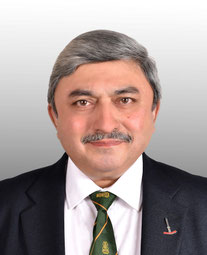
Neeraj Bali is a veteran of the Indian Army, Gen Bali served in several operational areas and roles including as CO of an anti-terrorist battalion and key staff officer handling intelligence and counterinsurgency operations in Kashmir. He was also Security Advisor to the Government of Lesotho.
An M.Sc and M Phil, he is also an alumnus of the Asia Pacific Centre of Security Studies, USA.
He has spoken extensively, including on CI at SCIP Annual Conference, (Atlanta), SCIP European Summit, (Cascais) and Tata Sons’ CXO Conference, (Mumbai). Also, at the prestigious Indian Institute of Management, Ahmedabad and several companies on the Future of Leadership, Risk and Organizational Culture, currently his Ph D subject.
He has been CEO of an organization running 92 colleges and schools. Later he was the CEO of a leading Engineering Consultancy Company in India. After a sabbatical, he is now Head Corporate Affairs and HR of the company.

GICI Institute for Competitive Intelligence GmbH
Korngasse 9, 35510
Butzbach
Phone: +49 6033 971377
Fax: +49 6033 971376